Finding an old book is easy. Working out whether it is a true first edition is where things get interesting.
A book may look old, smell old, have a charmingly faded spine and still be nothing more than a later printing. Equally, a plain-looking hardback picked up at an op shop may turn out to be the first appearance of a book collectors actually want.
The trick is deduction. You do not identify a first edition from one clue alone. You build a case.
This guide walks through the same process collectors use when trying to answer the question: is my book a first edition?
Step 1: Start with the copyright page
Open the book and find the copyright page. This is usually on the reverse of the title page.
The copyright page may contain the publisher’s name, year of publication, printing details, edition statements, a number line, copyright information and the country of printing.
This page is your first stop, but not your final answer.
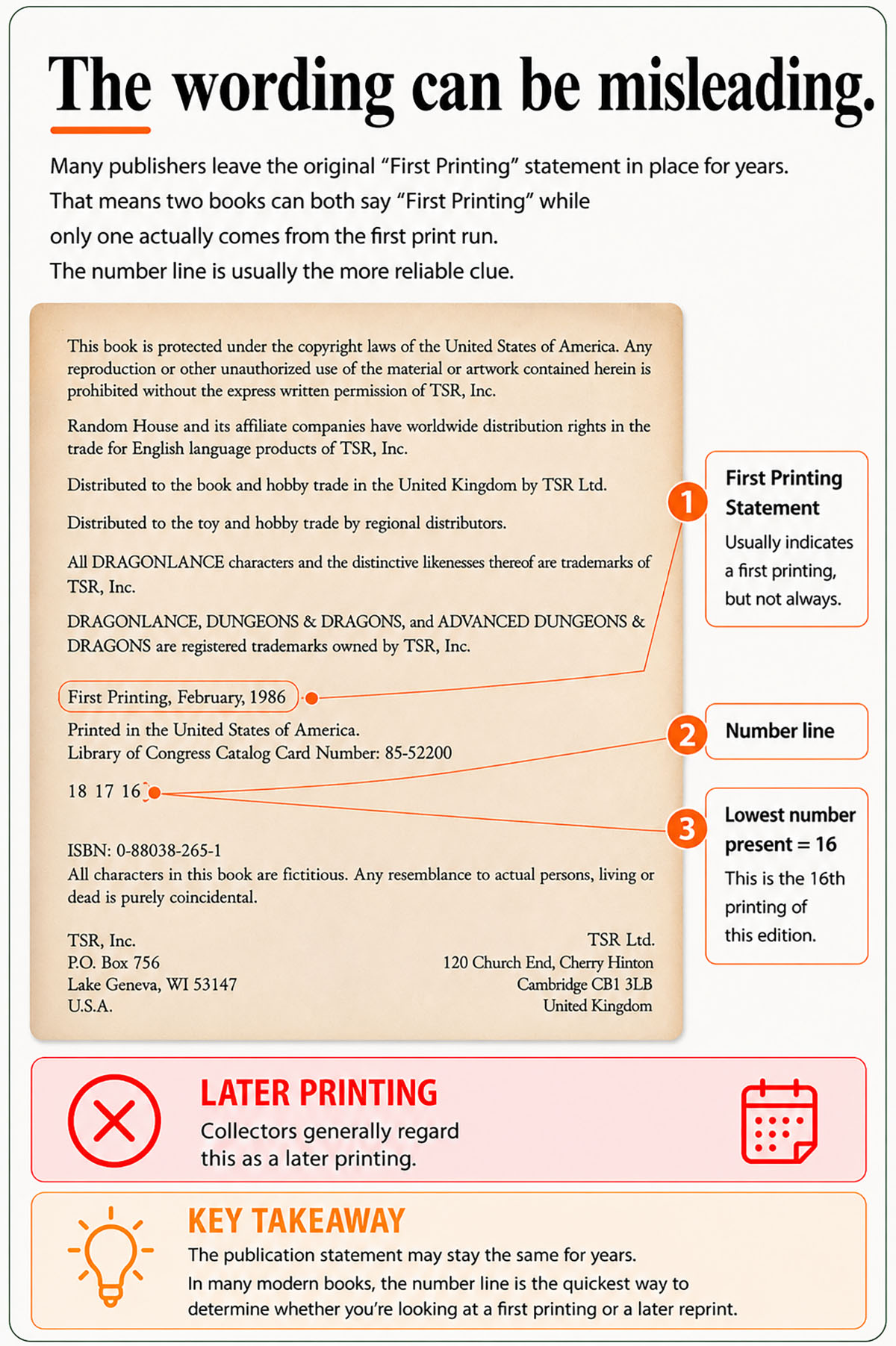
Some books clearly state “First Edition” or “First Printing”. That is helpful, but it is not always enough. Some later printings keep the words “First Edition” on the copyright page because the text itself belongs to the first edition setting, even though that particular copy was printed later.
Collector’s Tip
Treat “First Edition” as evidence, not proof. It is one clue in a wider identification process.
Step 2: Look for a number line
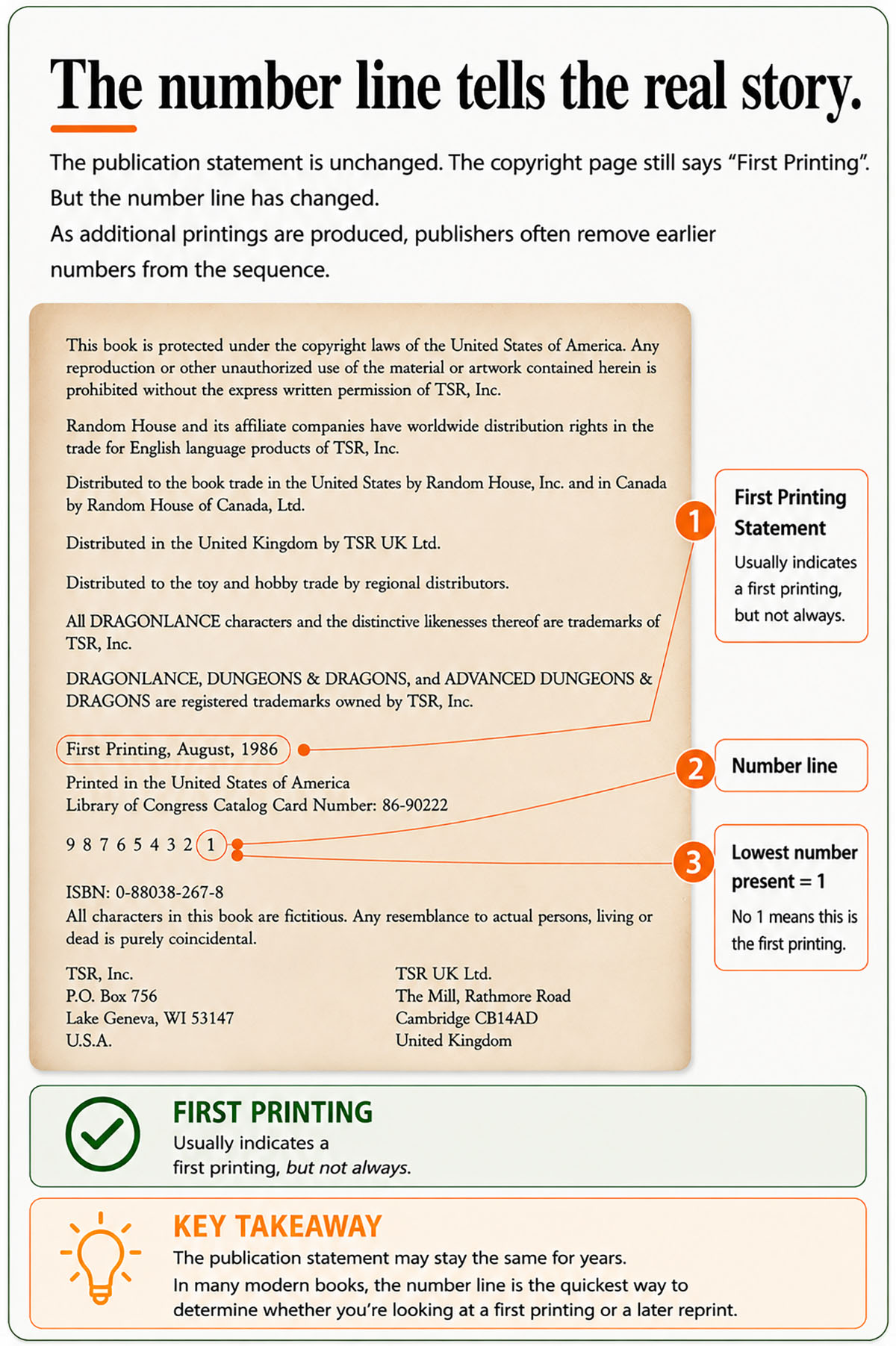
Many modern books use a number line. It may look like this:
- 1 2 3 4 5 6 7 8 9 10
- 10 9 8 7 6 5 4 3 2 1
In many cases, if the lowest number present is “1”, the book is a first printing.
If the lowest number is “3”, it is usually a third printing. If the lowest number is “7”, it is usually a seventh printing.
So:
- 1 2 3 4 5 6 7 8 9 10 = likely first printing.
- 3 4 5 6 7 8 9 10 = likely third printing.
But there are exceptions. Some publishers use slightly different systems. Some use years in the number line. Some remove numbers differently. Some older books do not use number lines at all.
Still, for many twentieth and twenty-first century books, the number line is one of the strongest clues.
Step 3: Check for “First Edition” or “First Printing”
Look carefully for direct statements such as:
- First Edition
- First Printing
- First Published
- First Impression
- Published in [year]
- First published by [publisher] in [year]
“First edition” and “first printing” are not always the same thing.
A first edition is the first version of the book produced from a particular setting of type or publication form. A first printing is the first batch printed from that edition.
Collectors usually want the first edition, first printing.
A later printing of the first edition may still be interesting, but it is generally less desirable than the first printing.
Step 4: Match the title page and copyright page
On older books, the title page can be just as important as the copyright page.
Check whether the date on the title page matches the date on the copyright page.
If the title page says 1925 and the copyright page says 1925, that is promising.
If the copyright page says 1925 but the title page says 1931, you may be looking at a later printing or later issue.
Many nineteenth and early twentieth century books are identified by tiny differences between title page dates, publisher addresses, advertisements, binding details and printing statements. This is where serious bibliography begins.
Potential Bargain Sign
A seller describes the book as “old” but does not show the title page or copyright page. Those two pages may hold the real answer.
Step 5: Identify the publisher
The first edition is usually published by the original publisher in the original country of publication.
For example, a book by a British author may have a UK first edition and a later American edition. Sometimes the American edition appears first. Sometimes the UK edition is the true first. Sometimes both are collected, but one is more desirable.
Ask yourself
- Who is the author?
- What country was the book first published in?
- Who was the original publisher?
- Does your copy match that publisher?
A later book club edition, export edition, school edition or cheap reprint can look very similar to a first edition at a glance.
Publisher matters.
Step 6: Check the binding
The binding can provide major clues.
Look at
- cloth colour
- spine lettering
- cover design
- publisher imprint
- size
- boards
- endpapers
Many first editions have known binding points. A later issue may use a different cloth colour, cheaper paper, altered lettering or a different publisher’s device.
For some books, the binding is one of the easiest ways to rule out a first edition. For others, it is one of the hardest.
If your book may be valuable, compare it against reliable first edition references, major bookseller listings, auction records and library records.
Step 7: Beware book club editions
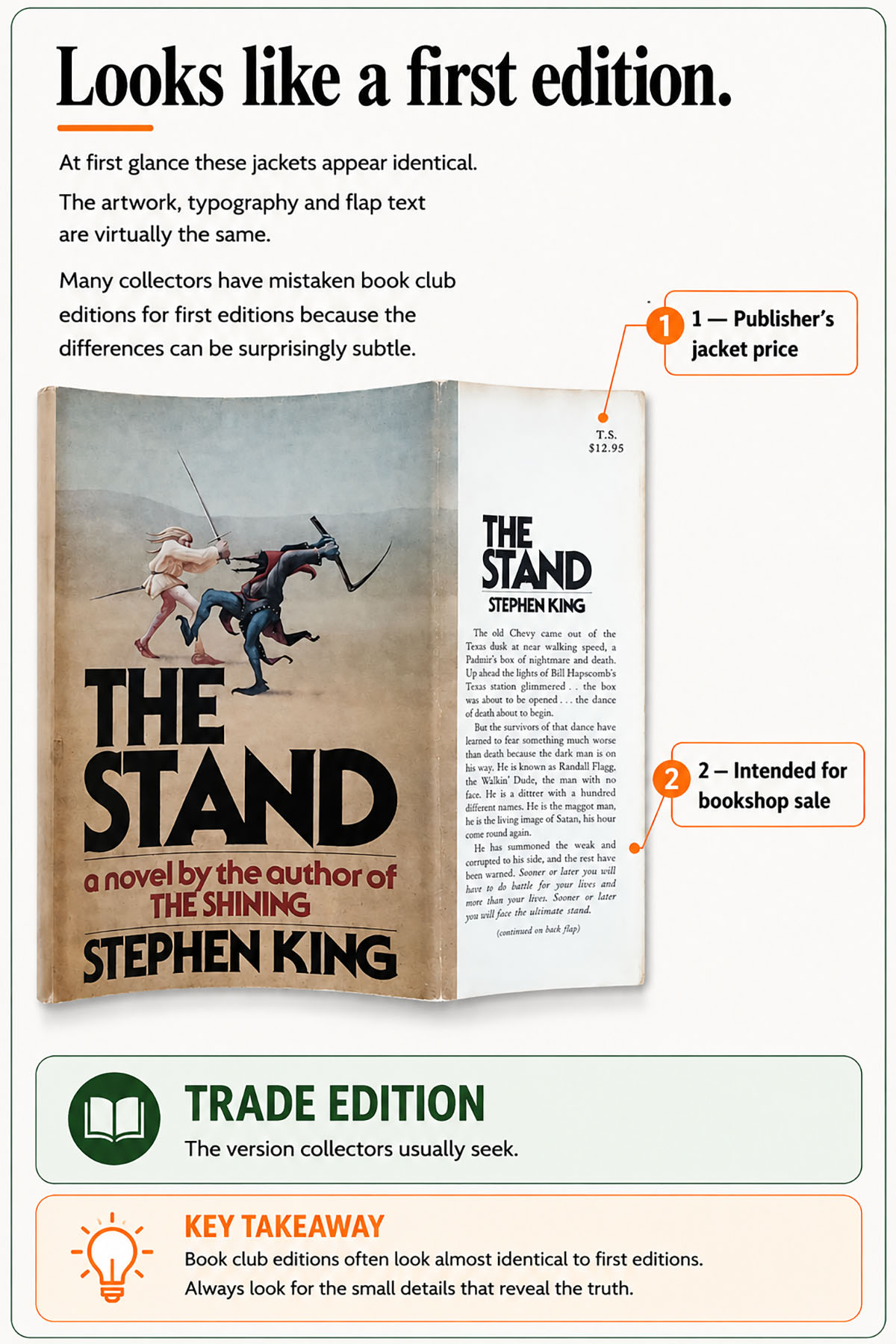
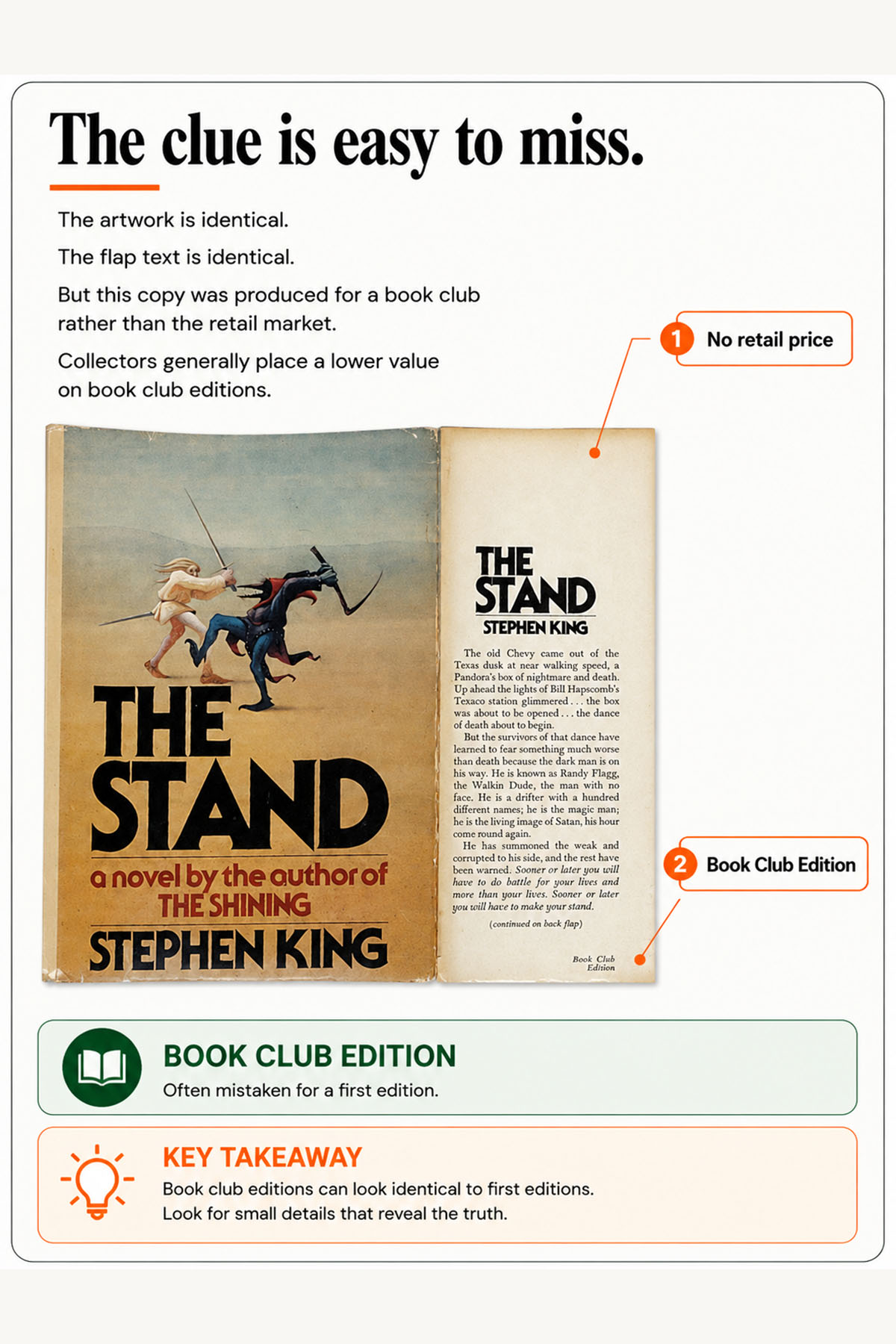
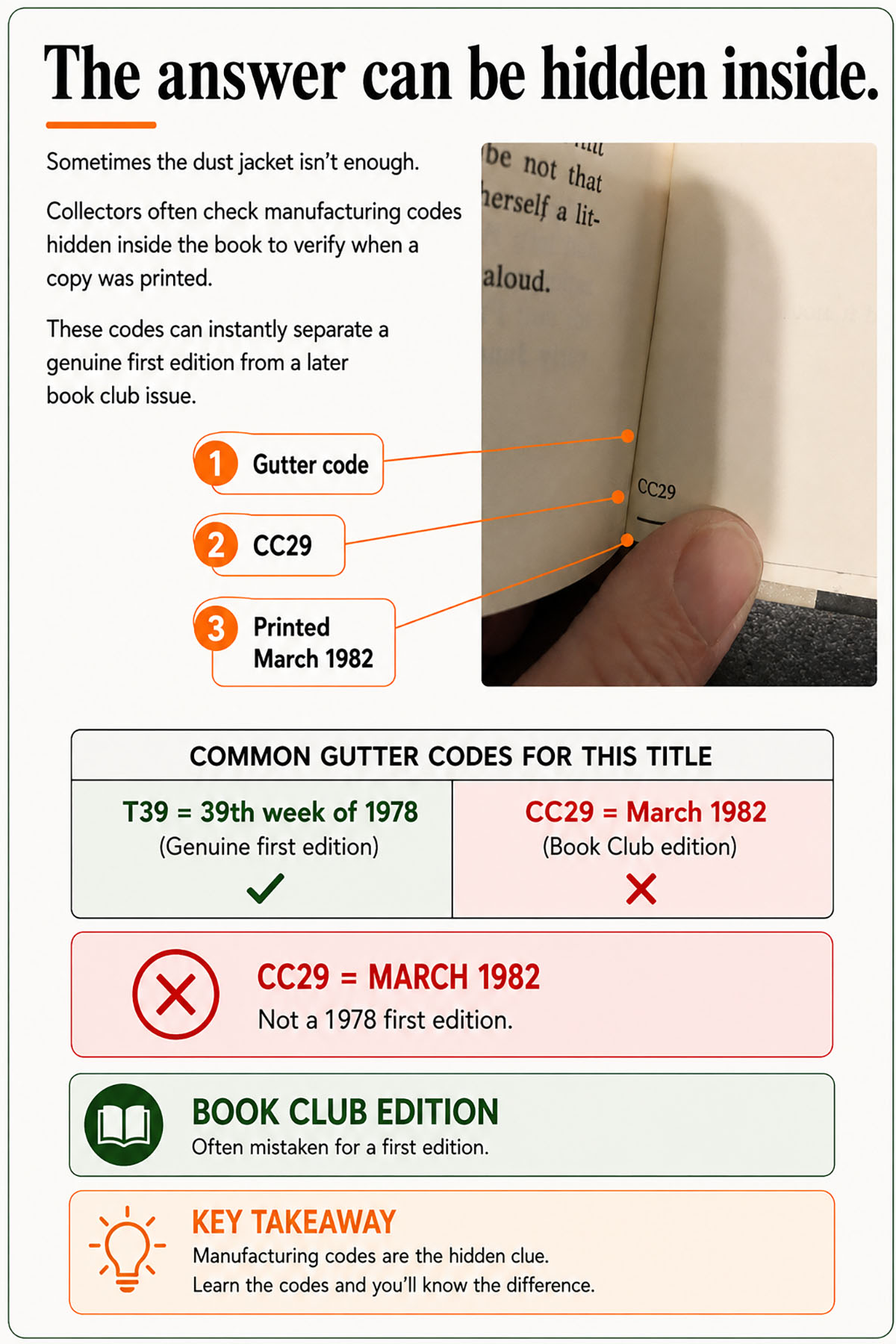
Book club editions are one of the most common traps.
They can look like proper hardback first editions, often with dust jackets, but they are usually less valuable.
Signs of a book club edition may include
- no price on the dust jacket
- cheaper paper
- smaller size
- different boards
- “Book Club Edition” printed on the jacket or copyright page
- blind stamp on the rear board
- no number line
- altered jacket text
Not all book club editions are worthless, but they are usually not what collectors mean when they ask for a first edition.
Step 8: Check the dust jacket
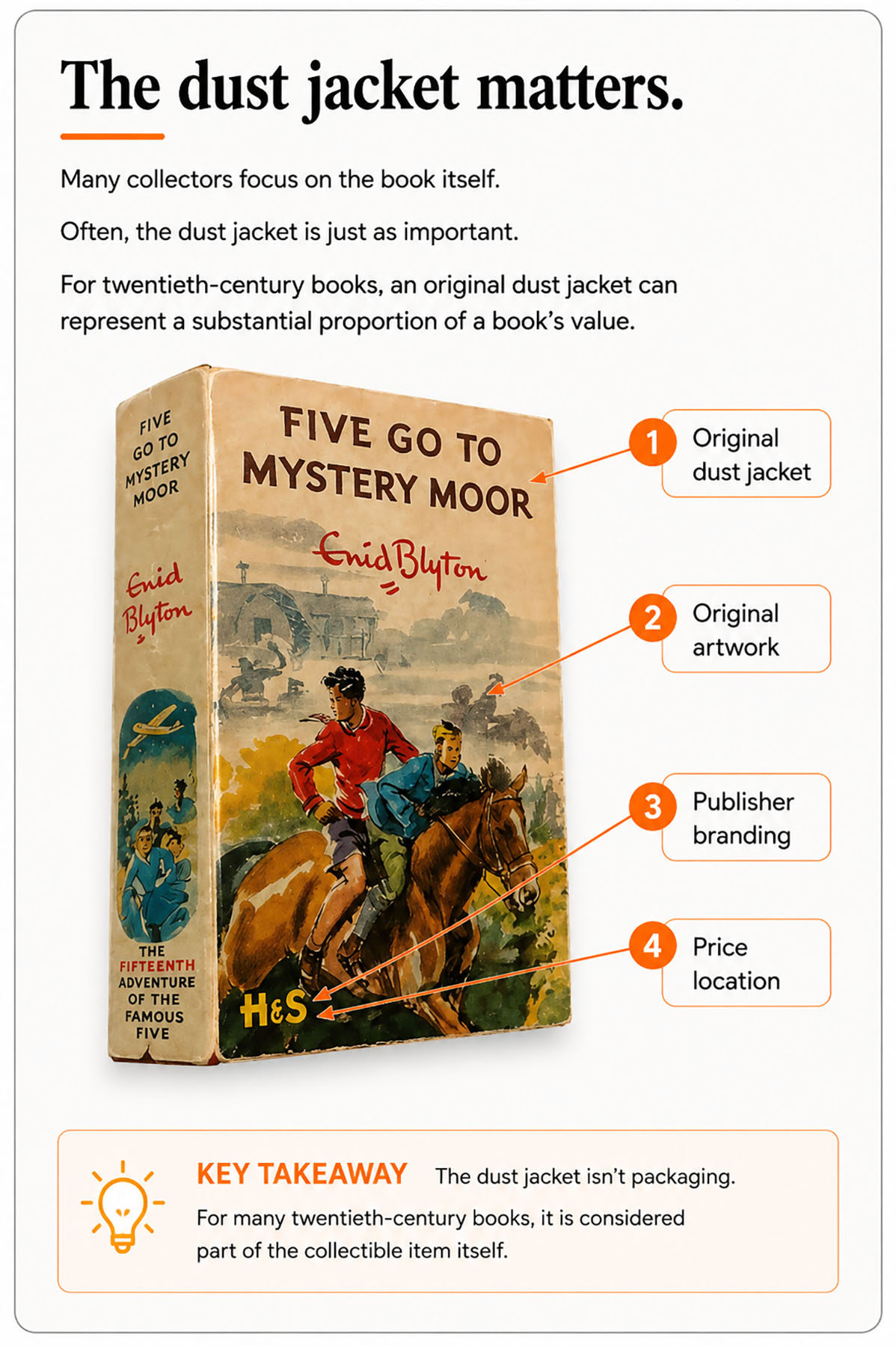
For modern collectible books, the dust jacket can be almost as important as the book.
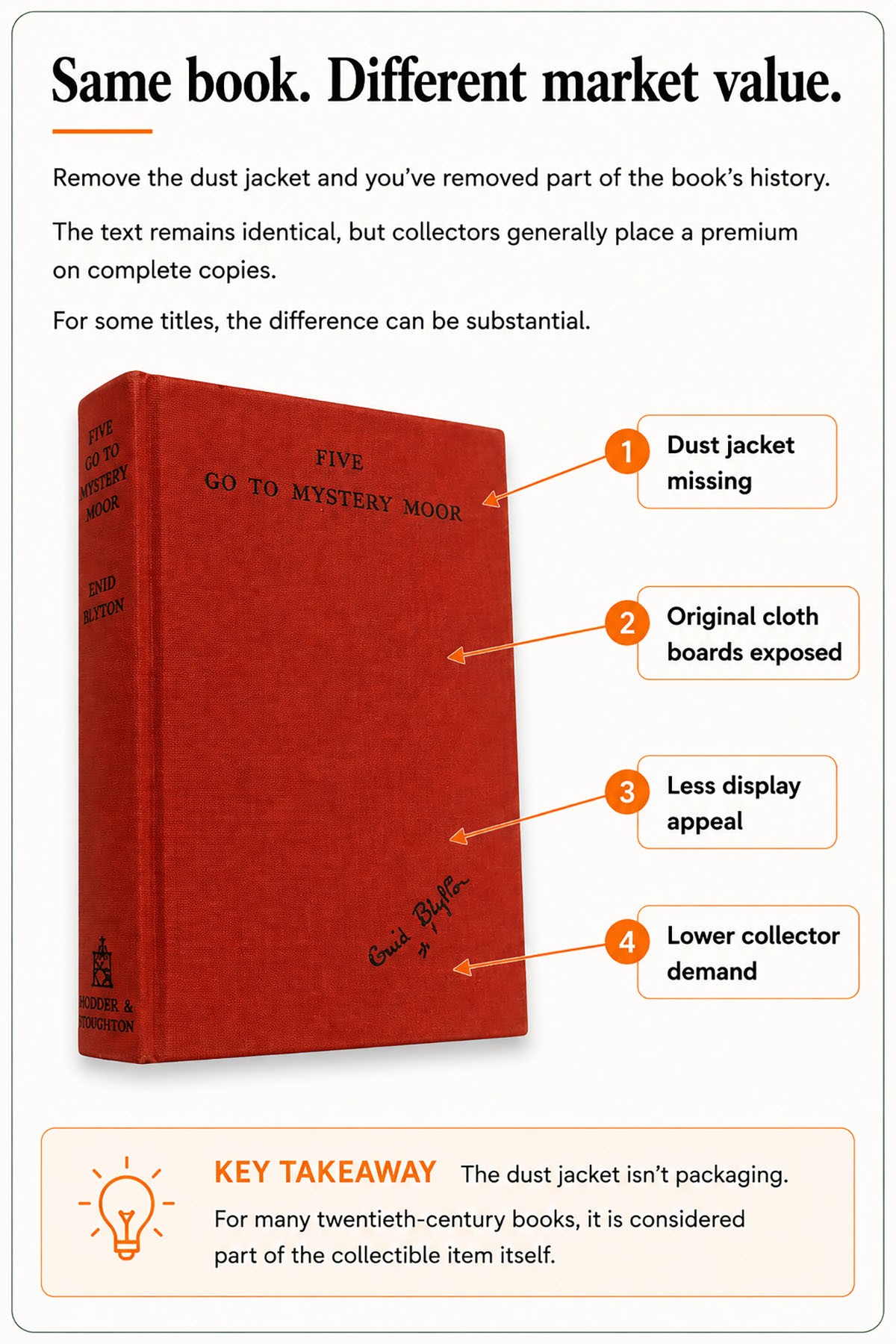
A first edition book without its original dust jacket may be worth a fraction of the same book with the correct jacket.
Collectors look for
- original dust jacket
- correct first-state jacket
- unclipped price
- minimal fading
- minimal chips or tears
- no heavy restoration
- no married jacket from another copy
A “price-clipped” dust jacket means the original printed price has been cut from the front flap. This often reduces value, especially for modern first editions.
An unclipped dust jacket with the correct original price is usually more desirable.
Collector’s Tip
For many twentieth-century first editions, the dust jacket is not a bonus. It is a major part of the value.
Step 9: Look for edition points
Some first editions are identified by specific errors or details known as issue points.
These may include
- misspelled words
- incorrect page numbers
- missing text
- incorrect advertisements
- specific publisher addresses
- specific dust jacket prices
- different endpapers
- changes to illustrations
- later corrected text
These points can be extremely specific.
A single changed word or corrected error can separate a valuable first state from a later issue.
This is why serious collectors often rely on bibliographies, specialist dealer descriptions and auction records.
A note about dust jacket prices
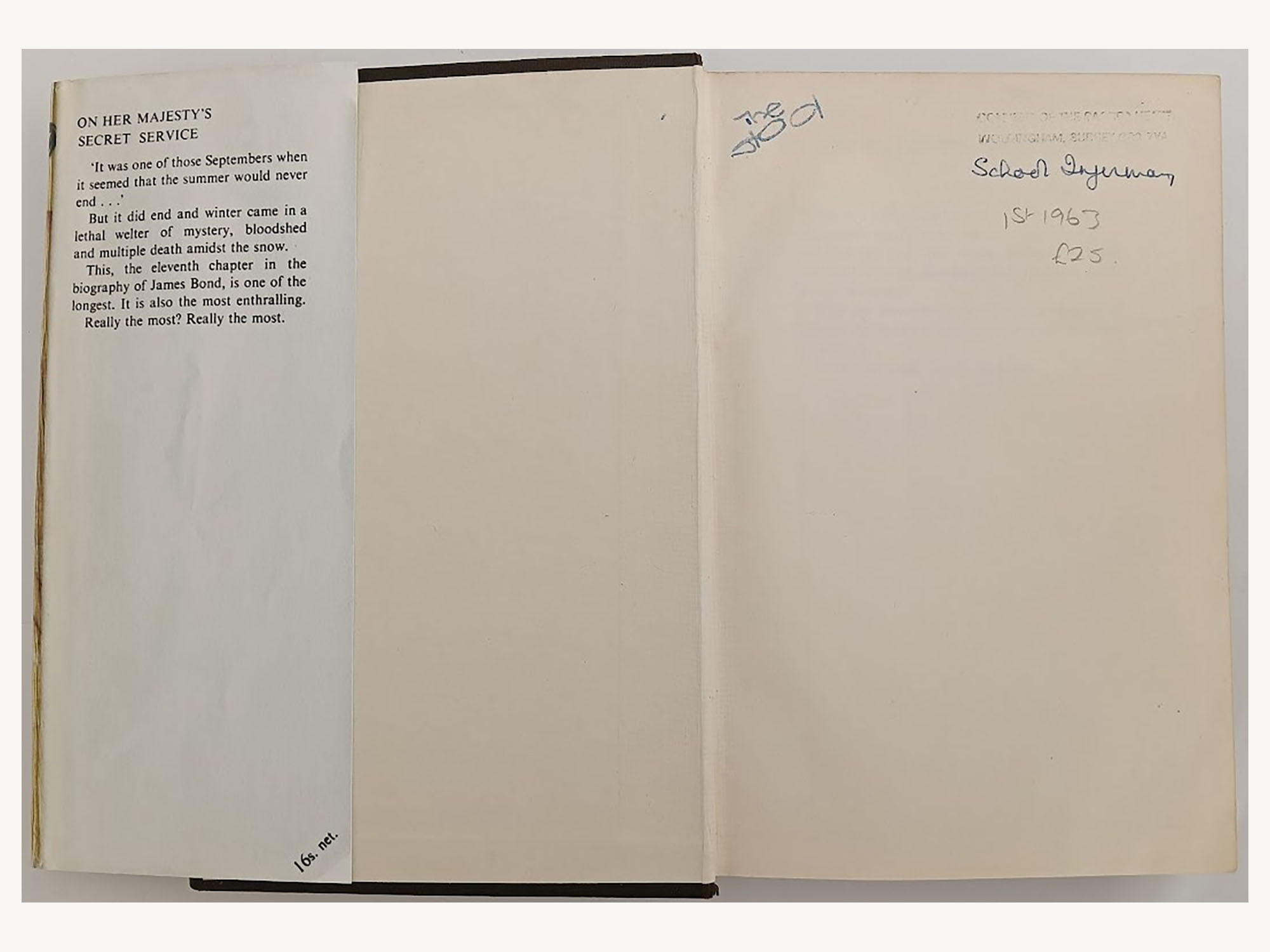
Price-clipping can be important. Intact original dust jackets will have the recommended price printed on the bottom of the inside-front cover.
Step 10: Research sold prices, not asking prices
Once you think you may have a first edition, research the market.
Do not rely only on current asking prices. Anyone can list a book for any amount.
Look for
- auction results
- sold listings
- specialist bookseller records
- major rare book dealers
- library catalogue notes
- bibliography references
A book is not valuable because someone is asking $2,000 for it. It is valuable because buyers have actually paid strong prices for comparable copies.
Condition and completeness matter enormously.
Step 11: Ask whether it is the first edition collectors actually want
Some books have multiple “firsts”.
There may be
- first UK edition
- first US edition
- first illustrated edition
- first paperback edition
- first revised edition
- first edition thus
- first trade edition
- first limited edition
“First edition thus” means the first edition in that particular form, not necessarily the first appearance of the work.
For example, a later illustrated edition may be desirable, but it is not the true first edition of the text.
Collectors usually want the earliest, most significant, most complete and most attractive version.
Step 12: Build a case before declaring it
A first edition identification should be a chain of evidence.
You want to be able to say
- the publisher is correct
- the date is correct
- the copyright page matches
- the number line or statement supports it
- the binding matches
- the dust jacket matches
- known issue points match
- no later printing indicators are present
If several clues line up, you may have a genuine first edition.
If one clue conflicts, investigate further.
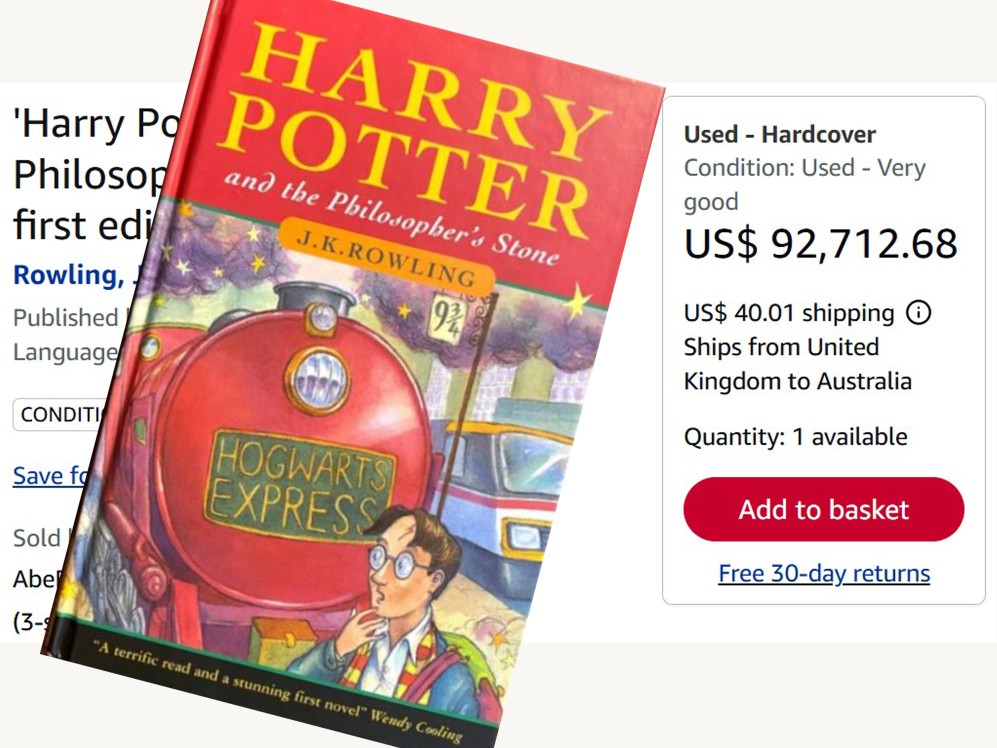
So you think you've found a first edition Harry Potter?
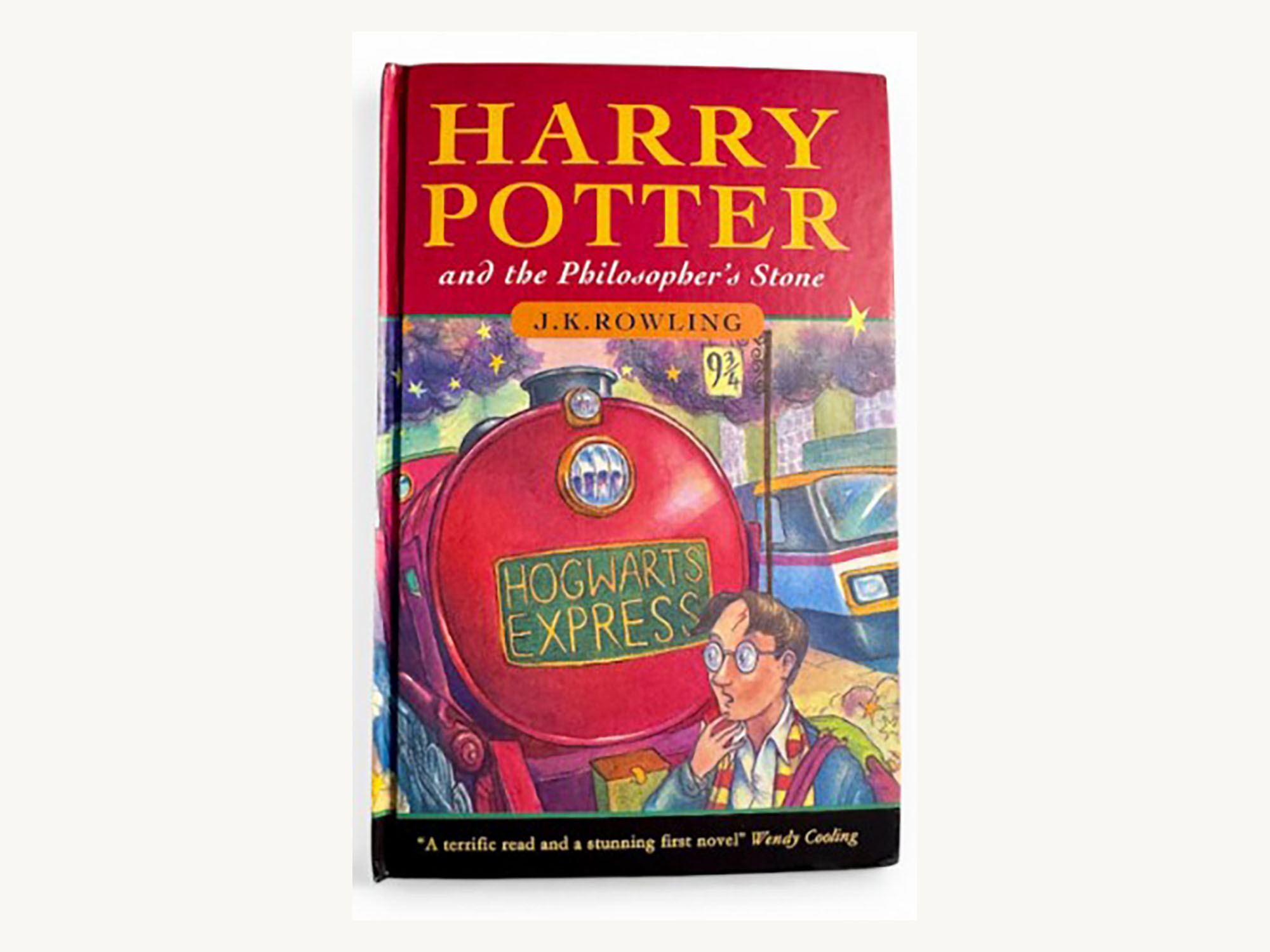
1. Original cover. Hardcover, no dust jacket. The first 500 editions were published without dust jackets; 300 copies went to libraries. The first 500 issues also included Wendy Cooling's review at the bottom of the cover.
What collectors look for beyond “First Edition”
Being a first edition is only the beginning.
Collectors care about quality, rarity and provenance.
Condition
Condition is crucial.
Collectors prefer copies that are clean, complete, firmly bound, free from major foxing, free from heavy staining, not ex-library, not heavily restored and not missing pages or plates.
Small faults may be acceptable in genuinely rare books, but condition still affects value.
Original dust jacket
For twentieth-century fiction, the original dust jacket can be the difference between modest and serious money.
A first edition without a jacket may still be collectible, but the best prices usually go to copies with the original jacket.
Unclipped dust jacket
An unclipped jacket keeps the original printed price.
Collectors generally prefer this because it helps confirm the jacket’s original issue and preserves completeness.
A clipped jacket is not fatal, but it usually lowers value.
Rarity
A book can be a first edition and still not be rare.
Collectors ask
- How many were printed?
- How many survive?
- How many survive in jacket?
- How many appear for sale?
- Is demand strong?
Scarcity only matters when people actually want the book.
Provenance
Provenance means ownership history.
Valuable provenance may include
- author signatures
- inscriptions
- association copies
- bookplates from notable owners
- letters or documents
- original receipts
- publisher correspondence
A signed copy is good. A copy inscribed by the author to an important person can be far better.
Completeness
For illustrated books, check that all plates, maps, inserts and endpapers are present.
A book missing a title page, plate or map may still be interesting, but it will usually be worth less.
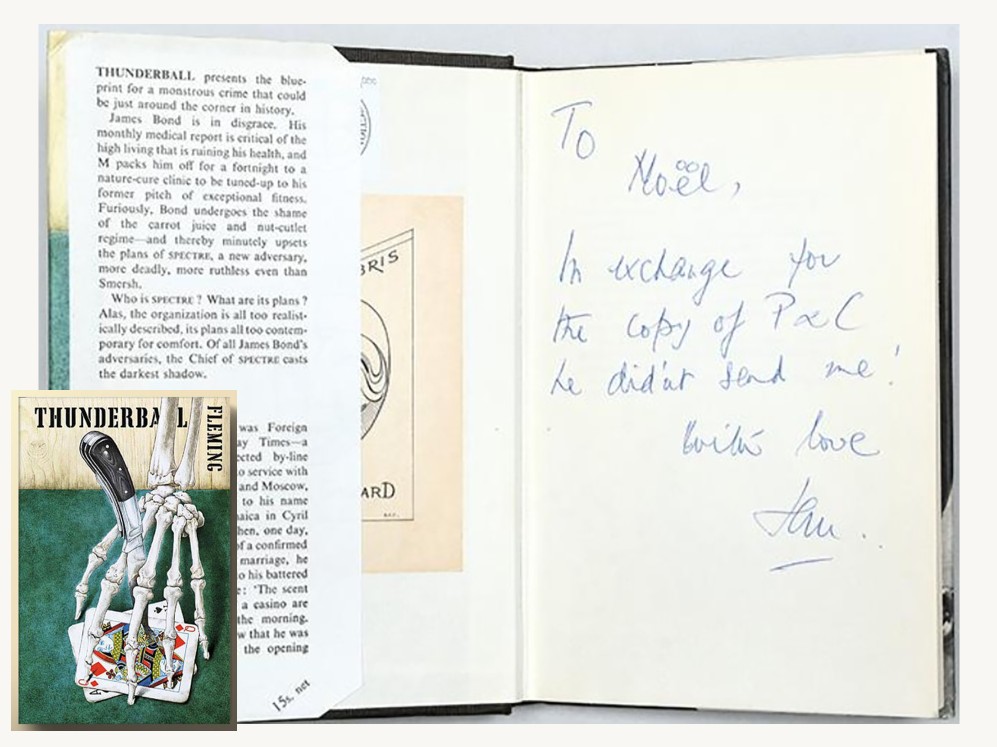
If you're a fan of both James Bond and Noel Coward, you're just US$48,000 away from happy. Image: AbeBooks
Final thoughts
So, is your book a first edition?
Start with the copyright page. Check the number line. Look for a first edition statement. Match the dates. Confirm the publisher. Inspect the binding and dust jacket. Then compare your copy against reliable references.
The answer is rarely one clue. It is usually a pattern.
The best finds happen when a book has been under-described: a true first printing, in the right jacket, in better condition than expected, with rarity or provenance the seller has missed.
That is the moment collectors are always chasing.